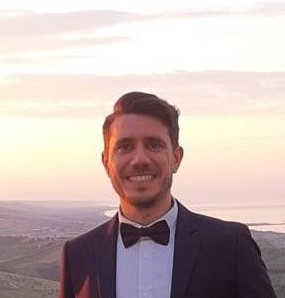
Since 2022, I have been working as assistant professor (RTD-A) at the department of economics of the Ca’ Foscari university of Venice. My research focuses on the assessment of the economic and financial impacts of climate change, with particular attention to the role of finance in scaling up green investments and to the macro-financial implications of both physical and transition climate risks.

From June 2020 until December 2021 I worked as postdoc research assistant at the Ca’ Foscari University of Venice on the development and validation of a Stock-Flow Consistent and Agent-Based model for the analysis of the impact of natural disaster and COVID-19 compound risk on the economic and financial stability of developing countries. From April 2020 to June 2020 I was a  postdoctoral research fellow at WU (Vienna University of Economics and Business). From January 2017 to June 2019 I was employed as postdoctoral research fellow at the University of Genoa, within the project SYMPHONY, funded by the European Commission (FP7 program under grant n. 611875), working on the development of the macroeconomic model and simulator Eurace.

I  hold a Bachelor in Economics and Finance and a Master of Science in Economic and Financial Sciences from Marche Polytechnic University. In 2017  I obtained a Ph.D. in Mechanical, Energetical and Management Engineering (Curriculum in Economics and Management) at the University of Genoa.


Contacts

mazzocchetti.andrea@gmail.com

Academic records

  • Ph.D. 2017

    Mechanical, Energy and Management Engineering . Curriculum: Economics and Management

    University of Genoa

  • M.Sc. 2013

    Financial and Economic Sciences

    Marche Polytechnic University

  • B.A. 2010

    Economics and Finance

    Marche Polytechnic University

International Projects

  • NGFS Short-Term Scenarios

    The NGFS short-term scenarios represent the first publicly available tool to provide a structured analysis of the immediate effects of climate policies and climate change on financial stability and economic resilience. The short-term scenarios complement the existing NGFS toolkit for assessing climate risk, including the NGFS long-term scenarios, which have become a well-established resource for financial actors to assess how economies might evolve over the coming decades

    The project focused on the development and implementation of a new generation of short-term scenarios for the Network for Greening the Financial System (NGFS).
    The NGFS is a global initiative on sustainable finance, composed of a network of 144 central banks and supervisory authorities, promoting best practices in managing climate and environmental risks in the financial sector. NGFS scenarios are widely used by central banks, regulators, private sector actors, governments, and academic institutions for climate risk assessments.

    Within the project, I contributed by supervising the development and production of macroeconomic and financial scenarios using the Stock-Flow Consistent (SFC) EIRIN macroeconomic model. The project is expected to have high scientific and socio-economic impact, as NGFS scenarios are used by a wide range of national and international institutions to assess risks and opportunities related to climate change.

    All the outcomes of the projects can be downloaded at: https://www.ngfs.net/en/publications-and-statistics/publications/ngfs-short-term-climate-scenarios-central-banks-and-supervisors.

  • SYMPHONY

    Orchestrating Information Technology and Global Systems Science for Policy Design and Regulation of a Resilient and Sustainable Global Economy

    The project has been funded by FP7 program under grant n: 611875. I have participated as Ph.D. student, working on the development of the macroeconomic model and simulator EURACE.

    My contribution to the project focused on developing an innovative integrated platform for the design and validation of economic policies, based on the large-scale, agent-based EURACE macroeconomic model.

    Project website: http://project-symphony.eu/